 Okay, we’re a day late—sorry about that—but welcome back to Simian Saturdays (on Sunday!), a series of reviews that examine the movies (and other media) that focused on King Kong, the giant monkey that captured generations of monster fans’ hearts. It’s part of our countdown to the March 7 release of King Kong, the next addition to our Illustrated Classics library.
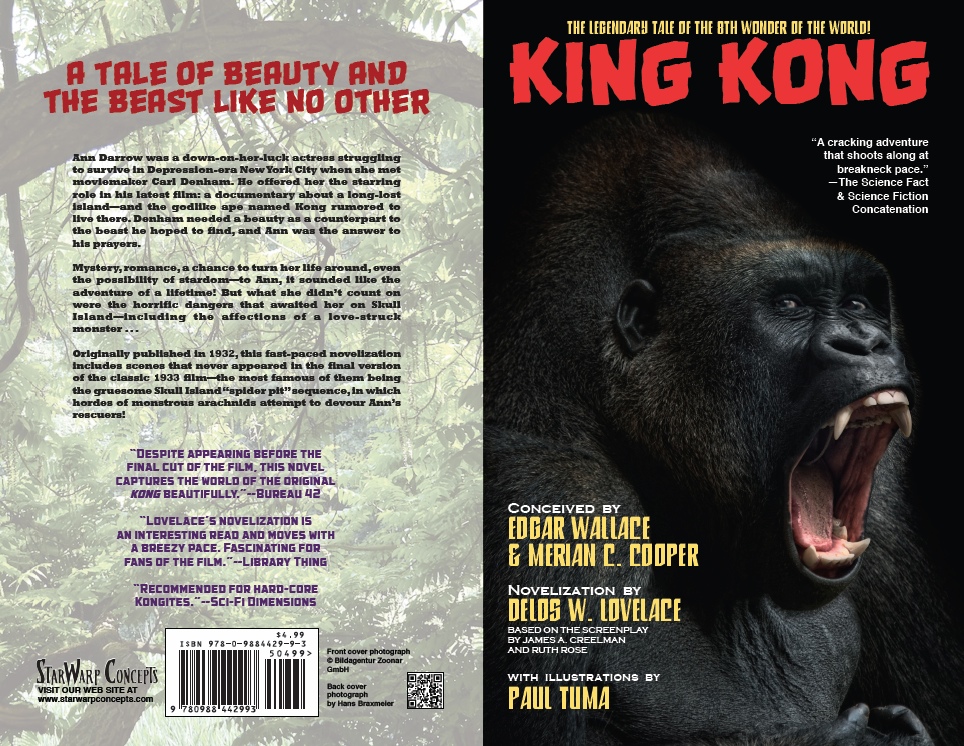
King Kong is an e-book exclusive that will reintroduce monster fans to the 1932 novelization of the original movie classic. Written by Delos W. Lovelace, based on the story by Edgar Wallace and Merian C. Cooper, it includes scenes that didn’t appear in the final cut of the film—including the notorious “spider pit” sequence in which Kong’s human pursuers are attacked by horrific arachnids and insects. Our version features six original black-and-white illustrations by comics artist Paul Tuma, whose pulp-influenced style has appeared in the pages of The Twilight Avenger, Flare, and Dan Turner: Hollywood Detective.
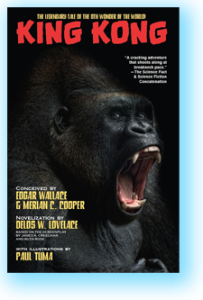 Not familiar with the beauty-and-the-beast story of Kong and his “love interest,” Ann Darrow (who was played in the 1933 original by the queen of the scream queens, Fay Wray)? Well, here’s our edition’s back-cover copy to bring you up-to-date:
Ann Darrow was a down-on-her-luck actress struggling to survive in Depression-era New York when she met moviemaker Carl Denham. He offered her the starring role in his latest film: a documentary about a long-lost island—and the godlike ape named Kong rumored to live there. Denham needed a beauty as a counterpart to the beast he hoped to find, and Ann was the answer to his prayers.
Mystery, romance, a chance to turn her life around, even the possibility of stardom—to Ann, it sounded like the adventure of a lifetime! But what she didn’t count on were the horrific dangers that awaited her on Skull Island—including the affections of a love-struck monster . . .
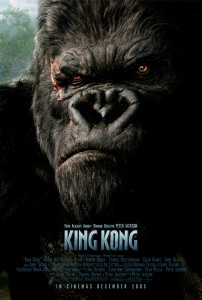 Today we’re viewing the 2005 remake of King Kong, directed, produced, and co-written by Peter Jackson (the Lord of the Rings and Hobbit movie trilogies) and starring Naomi Watts, Adrien Brody, and Jack Black, with actor and motion-capture veteran actor Andy Serkis (The Lord of the Rings, Avengers: Age of Ultron, the new Planet of the Apes films) as Kong.
Y’know, I really wanted to like King Kong when it came out in 2005. On the surface, it seemed to have the perfect driving force in Peter Jackson—an unabashed fanboy when it came to Kong ’33. I thought casting Naomi Watts as Ann Darrow was a great choice. Adrien Brody as Jack Driscoll seemed an unusual selection for the Venture’s first mate—until it was revealed the character had been changed from a seaman to a screenwriter/playwright friend of Denham’s. But when it was announced that comic actor Jack Black—Shallow Hal, School of Rock, Nacho Libre Jack Black—had been cast as showman-adventurer Carl Denham, the red warning flags went up for me, because most characters Jack Black plays are just thinly veiled versions of himself. It’s not that I hate Black, it’s just that he was miscast for this part; he seems completely out of place in the 1930s setting, and the fact that Denham in this remake is written as a smarmy douche bag doesn’t help Black any in giving his character some depth.
The main problem, however, is that the movie is just too long, clocking in at three hours as a remake of a film that originally ran between an hour and a half and two hours (depending on the cut) and filled with unnecessary scenes that just drag out its running time.
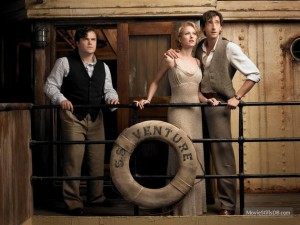
Jack Black, Naomi Watts, Adrien Brody
It’s forty-eight minutes before the Venture arrives at Skull Island. It’s at the hour-and-ten-minute mark when Kong finally appears. It’s another hour-plus before Kong is captured and the story shifts back to New York. There’s a brontosaurus and raptor stampede plus a Kong fight with three T-Rexes—instead of one, like in the original—that together take up about fifteen minutes. There’s a subplot with a Venture sailor named Jimmy, who’s reading Joseph Conrad’s classic novella Heart of Darkness (the basis for Francis Ford Coppola’s Apocalypse Now) so parallels can be drawn between Conrad’s protagonist and Denham, that serves no purpose to the overall story, especially since Jimmy doesn’t continue into the New York climax. There’s a scene of Ann performing her vaudeville shtick to entertain Kong, who winds up embarrassing himself and running away. There are lengthy New York chase sequences involving Kong pursuing a cab driven by Driscoll, and then the army pursuing Kong. There’s a ridiculous scene that practically screams, “Look, they’re bonding!” involving Kong carrying Ann to Central Park so he can butt-slide around on a frozen pond. There are slow-motion sequences so numerous you might think Zach Snyder of Batman v. Superman directed them. And there are the many, many long, meaningful shots of Kong and Ann staring at each other to demonstrate the depth of their relationship.
And yet, Watts does a great job as Ann. She’s loveable and vulnerable and awkward, and has a few moments where she’s not taking any crap from a giant monkey. Brody gets to be the nerdy writer who becomes the man of action, overcomes adversity (but not his simian rival—the airplanes do that for him), and ultimately wins the girl. And Andy Serkis makes Kong a sympathetic character, with Kong a complete badass when it comes to everything but being accepted by a world that considers him nothing but a mindless animal.
And Jackson delivers on re-creating the legendary “spider pit” scene excised from the original Kong, only making it a thousand times scarier and creepier and more disgusting than anything stop-motion-animation master Willis O’Brien could ever have created in 1932. Giant bugs, giant crab-things, giant worms with sharp-toothed maws—and that’s even before the enormous spiders start crawling down the walls!
At the end of the day, though, it’s all the unnecessary scenes that take what could have been a stellar remake—one that pays homage to the original but fleshes it out more for modern audiences—and turn it into an overblown mess. Sometimes, as the saying goes, shorter is better.
A leaner, tighter version of Jackson’s Kong could be a wonderful thing (although you’d still have to sit through Black’s performance as Denham), but that’s never going to happen. Which is unfortunate, because at the heart of this drawn-out film there’s still the original’s tale of a down-on-her-luck actress who finds herself the object of affection for a giant gorilla—a classic case of the ordinary person in the extraordinary situation. It’s a shame all the fanboying—well intentioned though it might have been—got in the way.
Bottom line? Despite its flaws, this version of Kong is leagues better than the campy 1976 remake I reviewed last week, but still not as good as the original King Kong. And yet it certainly treats its source material with the sort of love only a true Kong fan could demonstrate. If you’re willing to devote three hours to a full-bells-and-whistles reboot of the Kong legend, with good acting and effects (the recreation of 1930s New York is especially top notch), then grab some snacks and a large beverage and check it out.
King Kong (2005)
Starring Naomi Watts, Adrien Brody, and Jack Black
Directed by Peter Jackson
Screenplay by Fran Walsh, Philippa Boyens, and Peter Jackson
Based on the story by Edgar Wallace and Merian C. Cooper
Produced by Universal Pictures
Coming Next Saturday: We’re flashing back to the original Kong—this time as a children’s book! We shine the spotlight on Anthony Browne’s King Kong, the 1994 picture book by the acclaimed children’s author, as he retells the story of Ann and Kong—but with Marilyn Monroe, for some bizarre reason, cast in the role immortalized by Fay Wray! Be here for the next installment of Simian Saturdays!
King Kong (the SWC Illustrated Classic) goes on sale this Tuesday, March 7, 2017. In the meantime, visit its product page for further information.


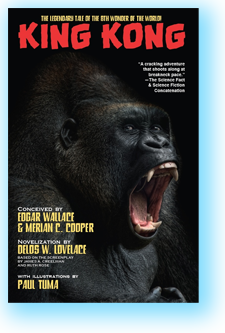 King Kong, currently available from the SWC webstore, is an e-book exclusive that reintroduces monster fans to the 1932 novelization of the original movie classic. Written by Delos W. Lovelace, based on the story by Edgar Wallace and Merian C. Cooper and the screenplay by James A. Creelman and Ruth Rose, it includes scenes that didn’t appear in the final cut of the film—including the notorious “spider pit” sequence in which Kong’s human pursuers are attacked by horrific arachnids and insects. Our version features six original black-and-white illustrations by comics artist Paul Tuma, whose pulp-influenced style has appeared in the pages of The Twilight Avenger, Flare, and Dan Turner: Hollywood Detective.
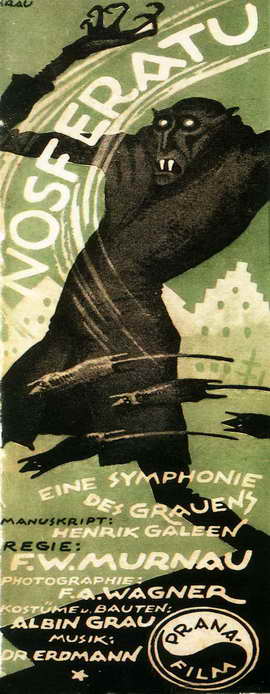 Okay, I’m a day late in celebrating it—I had to finish my review of King Kong 2005 for the latest (and also late) installment of Simian Saturdays—but yesterday, March 4, was the 95th anniversary of the day in 1922 when German movie-going audiences were introduced to, and horrified by, Count Graf Orlok, the vampiric star of director F.W. Murnau’s
 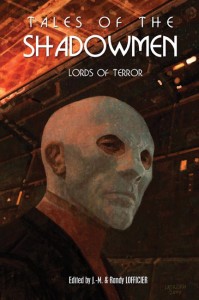 Speaking of Count Orlok, I’ve made some use of that blood-drinking monster in my own work. His is one of the vampire clans featured in the Saga of Pandora Zwieback novels Blood Feud and Blood Reign (and the upcoming Blood & Iron)—although I spell it Orlock there—and he made an appearance in a short story I wrote for the Black Coat Press anthology Tales of the Shadowmen 4: Lords of Terror (later reprinted in BCP’s The Vampire Almanac, Vol. 2).
 Since 2002, March 4th has been well known to the gaming community as International GM’s [Game Masters] Appreciation Day. Never heard of it? Well, that’s probably because, like me, you’re not involved in that ever-growing collection of fans. To explain this event, I’ll let this quote from the official GM’s Day site provide you with some background:
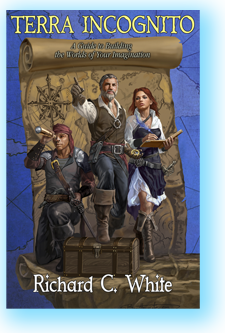 Terra Incognito: A Guide to Building the Worlds of Your Imagination
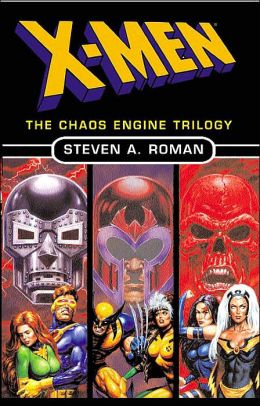 And speaking of character-driven X-Men stories, I’m reminded of
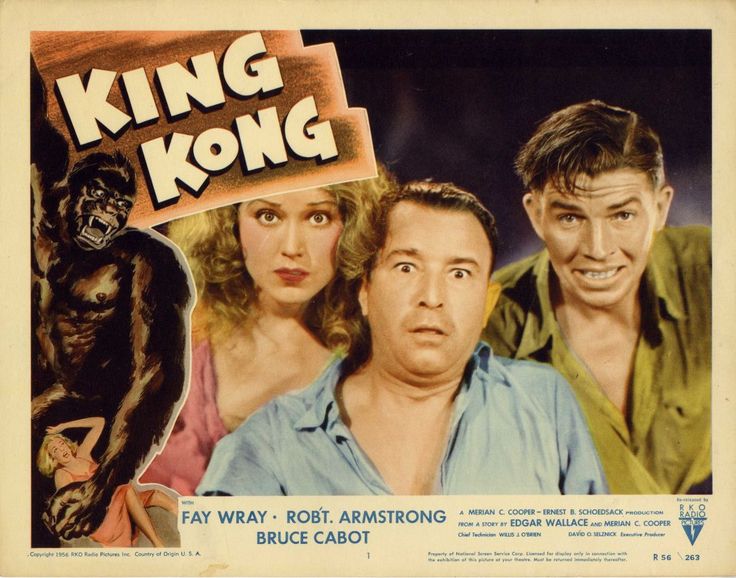
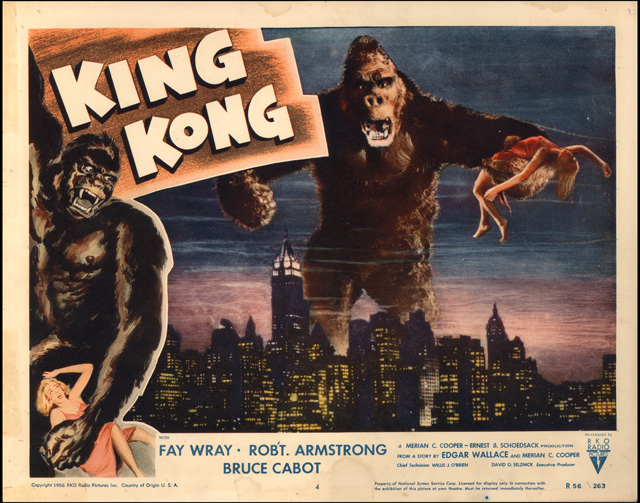
 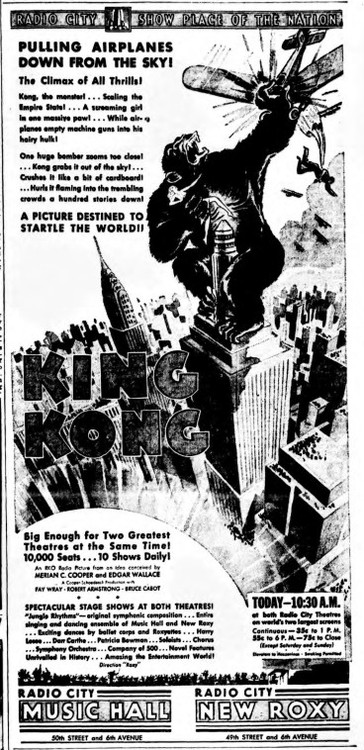 That’s right, it was 84 years ago today, on March 2, 1933, that New York movie audiences were introduced to, and terrified by, the Eighth Wonder of the World:
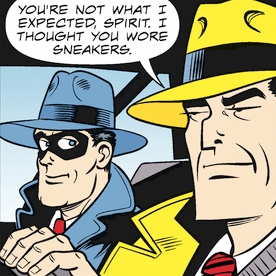 (By the way, in case you were unaware, since December 26, 2016 and up to the present, The Spirit has been guest-starring in the Dick Tracy comic strip—these days written by Mike Curtis and drawn by comic-art legend Joe Staton—in a storyline involving an immortality formula up for auction. Among the bidders: the Dragon Lady from Terry and the Pirates and Daddy Warbucks from Little Orphan Annie! You can start with Day One of the crossover by heading over to the
 The Saga of Pandora Zwieback Annual #1
 No events to show